
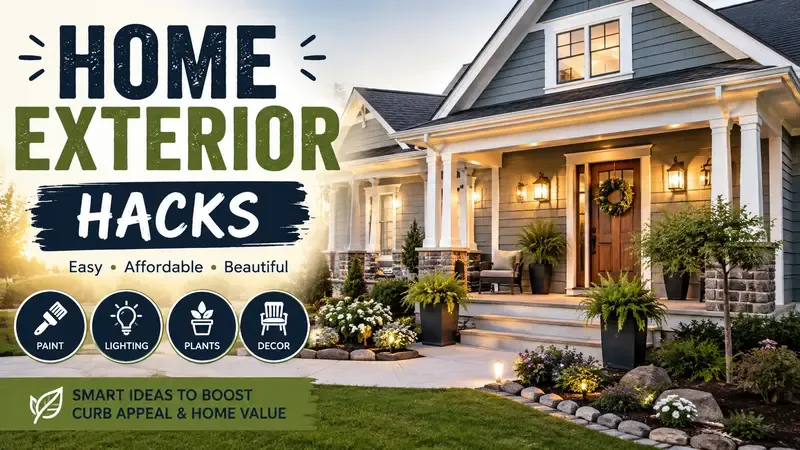
Your home’s exterior is the first thing people notice, and even small improvements can make a big difference. A clean entrance, attractive landscaping, updated lighting, and well-maintained outdoor areas can instantly improve curb appeal without requiring an expensive renovation. Home Exterior Hacks DecorAdHouse: Easy, Affordable Ways to Upgrade Your Home’s Curb Appeal explores practical ideas that homeowners can use to refresh their properties while keeping costs under control.
From repainting the front door and upgrading house numbers to organizing outdoor spaces and adding low-maintenance plants, simple changes can make an exterior feel more welcoming and polished. The key is to focus on improvements that combine appearance, functionality, and long-term value. Whether you are preparing your home for guests, improving your everyday outdoor experience, or planning future upgrades, these exterior hacks provide a practical starting point. With thoughtful planning and regular maintenance, you can create a beautiful exterior that reflects your style without exceeding your budget.
Practical Home Exterior Hacks
| Exterior Area | Affordable Improvement | Main Benefit |
|---|---|---|
| Front door | Paint, clean, or replace hardware | Creates a strong first impression |
| House numbers | Install clear modern numbers | Improves visibility |
| Walkway | Clean, repair, and add edging | Makes the entrance more inviting |
| Outdoor lighting | Add pathway or entry lights | Improves appearance and visibility |
| Landscaping | Add suitable plants and mulch | Adds color and structure |
| Porch | Add simple furniture and planters | Creates a welcoming entrance |
| Garage door | Clean, repaint, or update hardware | Refreshes a large exterior surface |
| Windows | Clean glass and frames | Makes the exterior look maintained |
| Fence | Clean, repair, or repaint | Improves the property’s overall appearance |
| Outdoor storage | Hide tools, hoses, and bins | Reduces visual clutter |
Start With Cleaning and Maintenance
Before purchasing new exterior decorations, inspect what you already have. Dirt, weeds, peeling paint, broken fixtures, and clutter can make a property look older than it actually is.
Clean the driveway, walkway, porch, windows, exterior furniture, and other suitable surfaces. Remove dead plants and unwanted weeds. Repair loose railings, damaged steps, broken lights, and other minor problems.
This approach is both economical and practical because it improves the existing property before you spend money on new features.
Upgrade the Front Entrance
The front entrance should be one of your first priorities because it naturally attracts attention.
A fresh coat of suitable exterior paint can transform an older front door. You can also replace worn hardware, install modern house numbers, add a new doormat, or place matching planters near the entrance.
Avoid choosing colors simply because they are trending. Consider the home’s exterior materials, roof color, trim, and surrounding landscape.
Improve Exterior Lighting
Exterior lighting combines appearance with function. Properly positioned lights can highlight architectural details while making pathways and entrances easier to navigate at night.
Useful locations include the front door, pathway, driveway, porch, and selected landscaping features.
Solar pathway lights can provide a relatively simple option for suitable locations. For permanent electrical installations, follow local electrical requirements and use qualified professionals when needed.
Make Landscaping Easier to Maintain
Good landscaping does not have to mean a complicated garden.
Choose plants based on your local climate, available sunlight, soil conditions, and maintenance needs. Native or climate-appropriate plants can often be easier to maintain than plants that struggle in local conditions.
Use mulch or suitable ground cover to create cleaner garden areas and help reduce weed growth. Keep plants trimmed so they do not block windows, pathways, or exterior lighting.
Reduce Exterior Clutter
A clean exterior immediately feels more organized.
Garden hoses, garbage bins, tools, toys, cables, and unused furniture can distract from otherwise attractive features. Store these items in appropriate locations or use practical outdoor storage solutions.
Do not hide essential equipment in a way that creates safety or access problems. The goal is organisation, not simply moving clutter from one place to another.
Use Affordable Decorative Features
Small decorative details can make a noticeable difference.
Consider:
- Weather-resistant planters
- Outdoor rugs
- Simple porch furniture
- Decorative house numbers
- Seasonal wreaths
- Exterior wall decorations
- Window boxes
- Low-maintenance garden borders
Choose only a few coordinated pieces. Too many decorations can make an exterior look crowded.
Two-Column Home Exterior Planning Guide
| Improve Now | Plan for Later |
| Clean windows and exterior surfaces | Replace outdated windows |
| Repaint the front door | Consider a larger entrance renovation |
| Remove weeds and debris | Redesign larger landscape areas |
| Organize outdoor storage | Build permanent storage |
| Replace damaged light bulbs | Upgrade the complete lighting system |
| Trim plants and trees | Add mature landscaping |
| Repair minor cracks and loose fixtures | Plan larger structural repairs |
| Refresh outdoor furniture | Invest in higher-quality outdoor furniture |
Future Planning for Your Home Exterior
A successful exterior improvement plan should look beyond quick cosmetic changes. Think about how the property may need to function over the next several years.
Start by identifying features that are likely to require replacement. These could include roofing, siding, windows, doors, fencing, drainage systems, landscaping, or outdoor lighting.
Create a priority list based on safety, condition, energy efficiency, maintenance requirements, and cost. Cosmetic upgrades can come after important repairs.
Year 1: Improve Appearance and Maintenance
Focus on affordable improvements that provide immediate results.
- Clean the exterior
- Repair minor damage
- Refresh the front door
- Improve house numbers
- Organize outdoor areas
- Maintain landscaping
- Improve basic exterior lighting
Years 2–3: Upgrade Functionality
Once basic maintenance is under control, consider improvements that make the property more practical.
Potential projects include:
- Better outdoor drainage
- Improved pathway lighting
- Fence repairs or replacement
- More efficient exterior doors
- Additional outdoor storage
- Low-maintenance landscaping
- Improved outdoor living areas
Years 3–5: Consider Larger Improvements
Plan larger projects carefully rather than rushing.
Depending on the property’s condition and budget, homeowners may consider:
- Exterior repainting
- New siding
- Window replacement
- Major landscaping
- Patio improvements
- Garage door replacement
- Roofing work
- Energy-efficiency upgrades
Obtain appropriate professional assessments and local approvals when a project affects structural, electrical, plumbing, drainage, or other regulated components.
Build a Realistic Exterior Budget
A future plan becomes more useful when you connect it to a budget.
Divide your spending into three categories:
Immediate needs:
Safety problems, water damage, broken steps, faulty lighting, and other urgent repairs.
Short-term improvements:
Painting, landscaping, lighting, storage, and decorative upgrades.
Long-term projects:
Roofing, siding, windows, major landscaping, patios, and other expensive improvements.
This method helps prevent cosmetic projects from taking priority over important maintenance.
Think About Sustainability
Future exterior planning should also consider resource efficiency.
Choose durable materials, reduce unnecessary waste, and select landscaping appropriate for the local environment. Efficient outdoor lighting can help reduce electricity use, while suitable plants can reduce maintenance and watering requirements.
Where appropriate, consider features such as rainwater management, permeable surfaces, shade-producing plants, and durable exterior materials.
Common Mistakes to Avoid
One common mistake is trying to follow every exterior design trend. Trends change quickly, while major exterior projects can last for decades.
Another mistake is ignoring maintenance. A beautiful patio or garden will lose its appeal if you neglect drainage, weeds, paint deterioration, or structural issues.
Avoid choosing plants without considering their mature size. Plants that eventually become too large can block windows, damage pathways, or require excessive maintenance.
Finally, do not spend heavily on decoration before addressing visible damage or functional problems.
A Practical Future-Proof Strategy
The best Home Exterior Hacks DecorAdHouse strategy is to improve the property in stages.
First, clean and repair. Next, improve the entrance and landscaping. Then upgrade lighting and outdoor functionality. Finally, plan larger projects based on the home’s age, condition, climate, and long-term goals.
This approach creates a better-looking exterior today while preparing the property for future improvements.
Conclusion
Home exterior improvement does not need to be expensive or complicated. Small changes can improve curb appeal, while thoughtful planning can make the property easier to maintain and more functional for years to come.
The most effective strategy is to combine cleaning, maintenance, affordable upgrades, smart landscaping, practical organization, and long-term planning. By completing projects in stages and prioritizing important repairs, homeowners can improve their property’s appearance without wasting money on unnecessary changes.
Home Exterior Hacks DecorAdHouse is ultimately about making practical decisions that balance beauty, functionality, durability, and budget. A well-planned exterior is not just attractive today—it should keep working well for the homeowner in the future.
For more information, visit my website, BetterHomeBlogs.